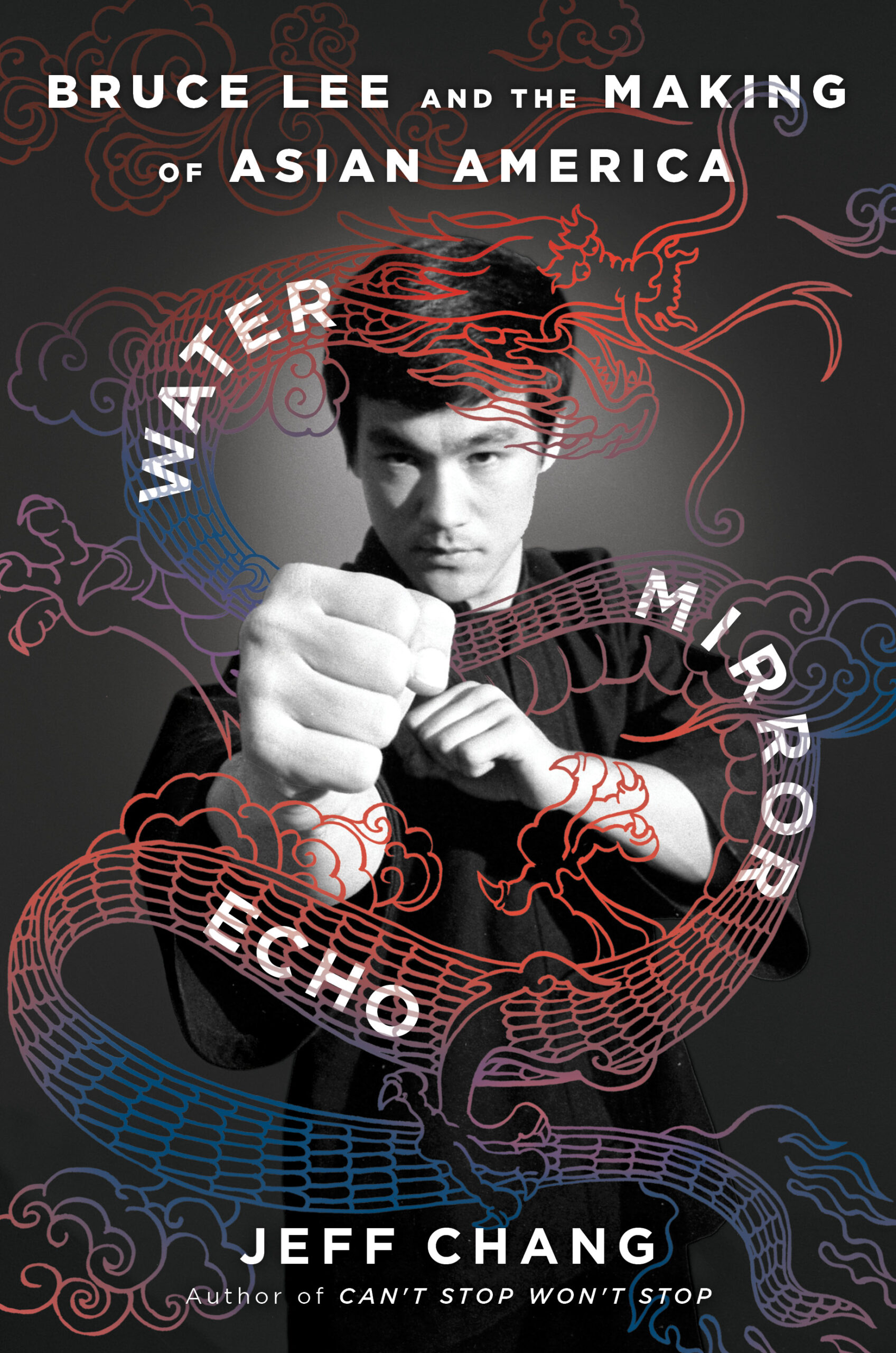
Water Mirror Echo
Water Mirror Echo
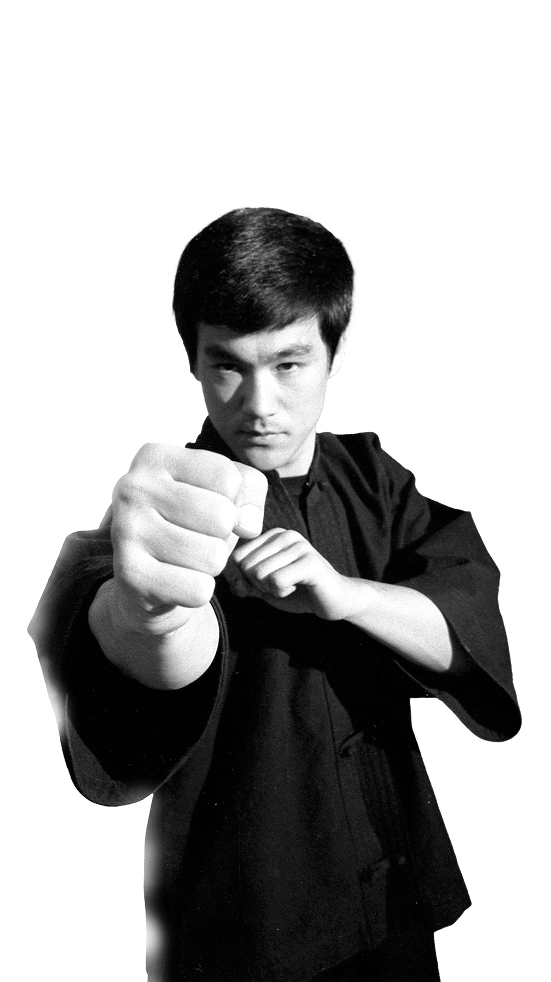

BRUCE LEE: A CULTURAL BIOGRAPHY
~ EPIC AND INTIMATE ~
SET WITHIN THE STORY OF
THE RISE OF ASIAN AMERICA
As the best-known martial artist and one of the most celebrated action stars ever, Bruce Lee is a global icon. He symbolizes swagger, strength, and the unbeatable spirit of the underdog. But in more than fifty years since his untimely death at age thirty-two, the legend has eclipsed the real man.
During his lifetime, Bruce fought to be seen—from Hong Kong to Hollywood, Asian tenements to American ghettos, the lonely garret to the international screen. He emerged as a star in an era when Asian Americans were fighting against exclusion and invisibility.
Now, drawing on private letters, rare documents and photos, and interviews with his closest confidants, Water Mirror Echo reveals the Bruce many never saw and places his complicated life within a revolution from which it cannot be separated: the emergence of Asian America. An unflinching, page-turning biography, here is the story of how Bruce became a hero not just for Asian Americans, but also for anyone who has ever felt invisible.
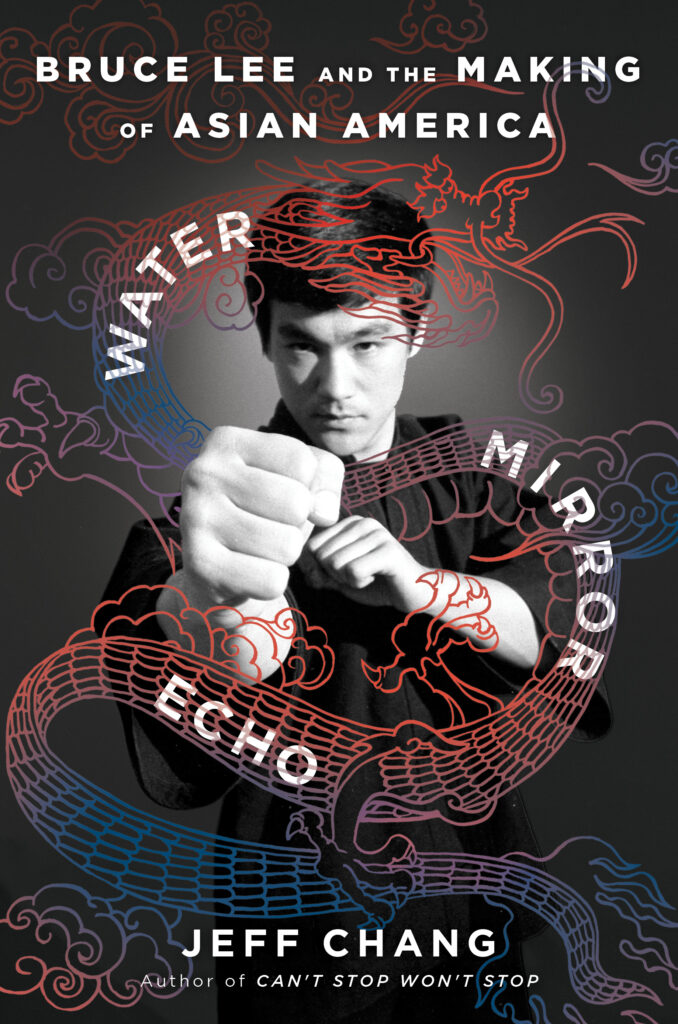
- Available Now!
- Bookshop
- Powells
- Amazon
- Barnes and Noble
- Ebook
- Bookshop
- Apple
- Amazon
- Barnes and Noble
- Audiobook
- Audible
- Apple
- Barnes and Noble
- Spotify
- Google Play
- Libro.fm
- Everand
- Kobo
一
ANCHOR BABY
一
ANCHOR BABY
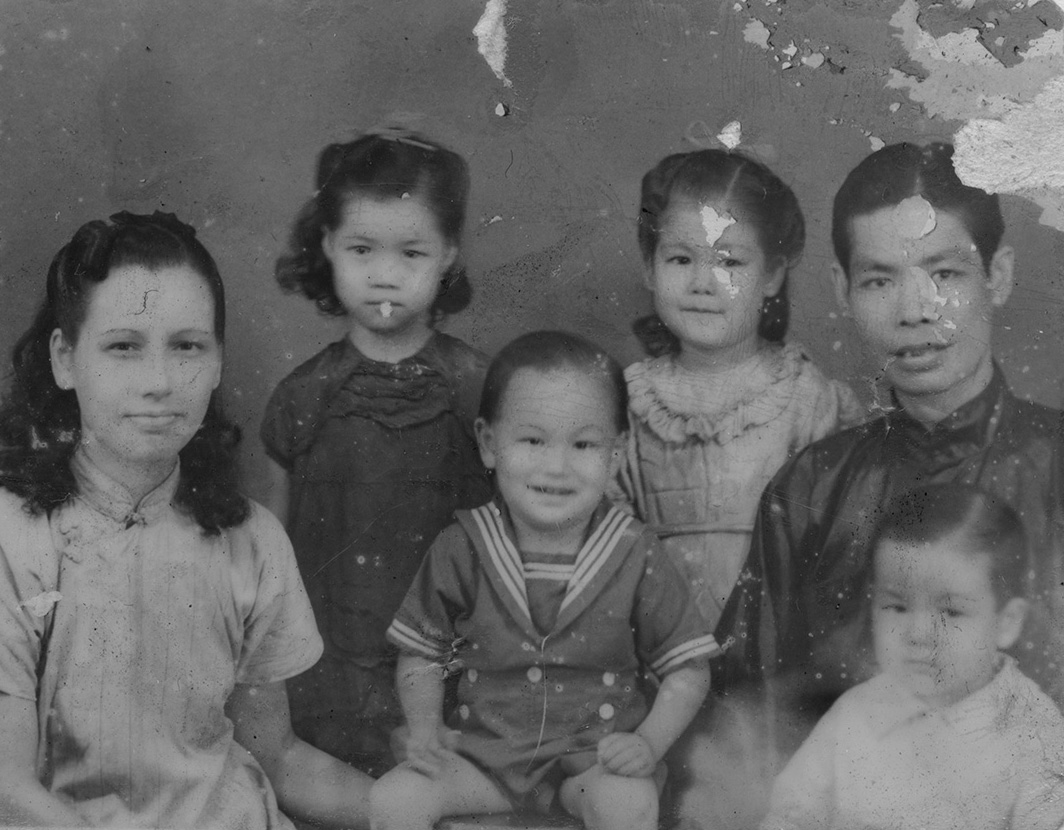
“That I should be an American-born Chinese was accidental,” Bruce Lee once mused, “or it might have been by my father’s arrangement.”
He had been born in San Francisco’s Chinatown on November 27, 1940, at the Chinese Hospital, at 7:12 a.m.—an auspicious time, many have noted, in the Chinese astrological hour of the Dragon in the year of the Dragon. He was birthed in a hospital built just a generation before by Chinese Americans to remedy their exclusion from the city’s basic health services. Had he been born today, Bruce Lee might have been called—in the divisive language used to describe immigration—an “anchor baby.”
二
WAR CHILD
二
WAR CHILD
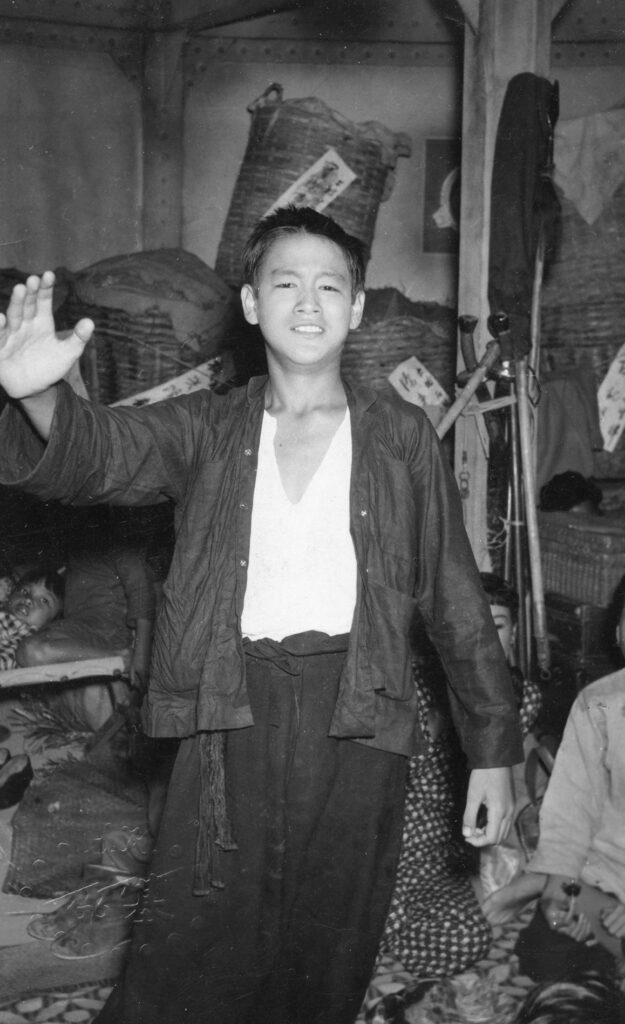
In the summer of 1945, the surrender of the Japanese brought the occupation to an end. The sickly boy suddenly blossomed into an energetic one, a perpetual sound-and-motion machine. Each day from when the birds began singing and the dogs started barking until they all went to sleep, Bruce’s mind and body needed constant stimulation. As he rushed to and fro, his family exclaimed, “Mou si ting, cho m’ding! 無時停、坐唔定—he can’t be stopped, he won’t sit still!”
三
SEARCHER
三
SEARCHER
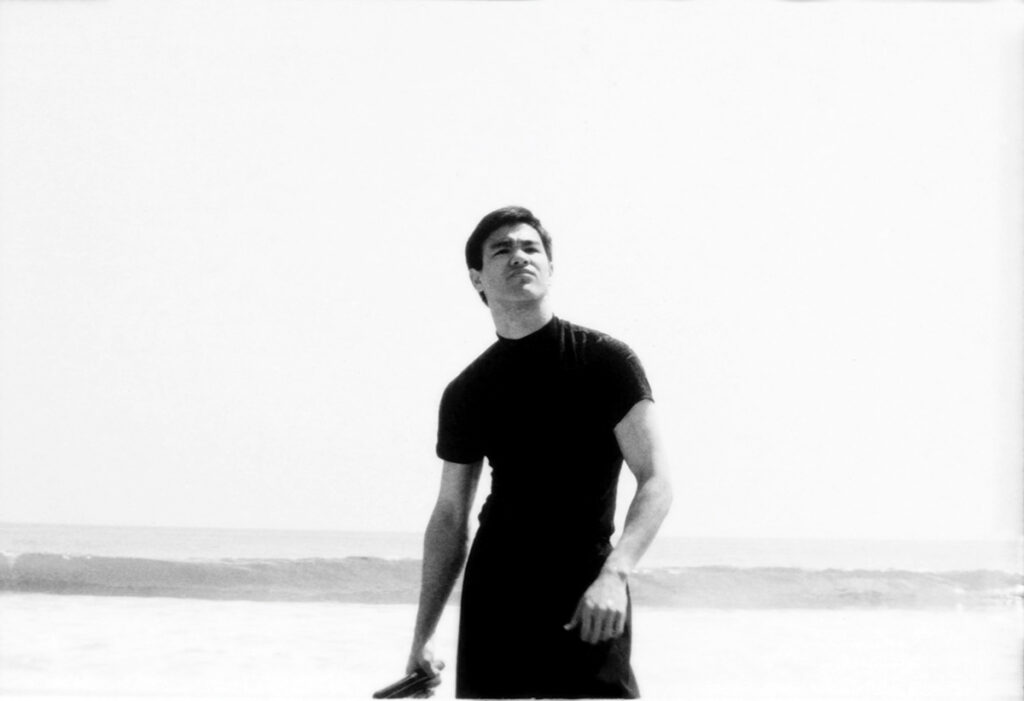
Bruce told Jesse Glover of his admiration for “the slyness of the monkey style, the strong punching and footwork of the Hung [Gar], the tearing grips of the Eagle Claw, the nervous energy of the Southern Mantis, the smooth kicks of the Northern Mantis and Jeet Kune, and the effective swings of the Choy Li Fut.” He said he was studying Chinese philosophy and Chinese martial arts to better understand how the two related to each other. His enthusiasms poured out of him, sometimes so fast that his thoughts outran his English, his tongue shut down, and his entire body trembled with the swelling ideas.
四
FIGHTER
四
FIGHTER
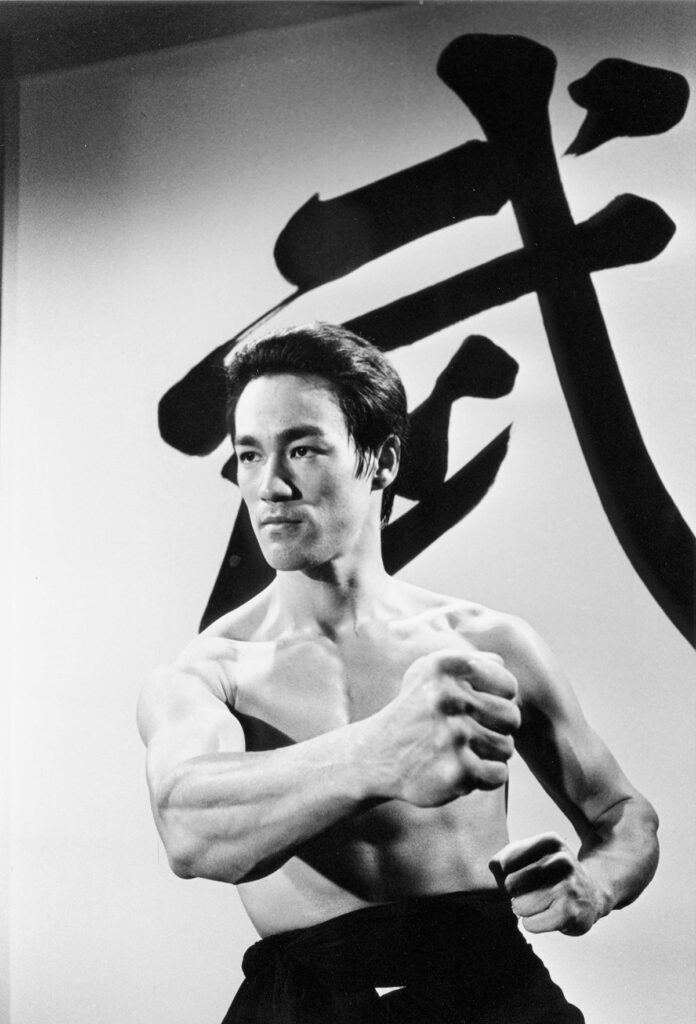
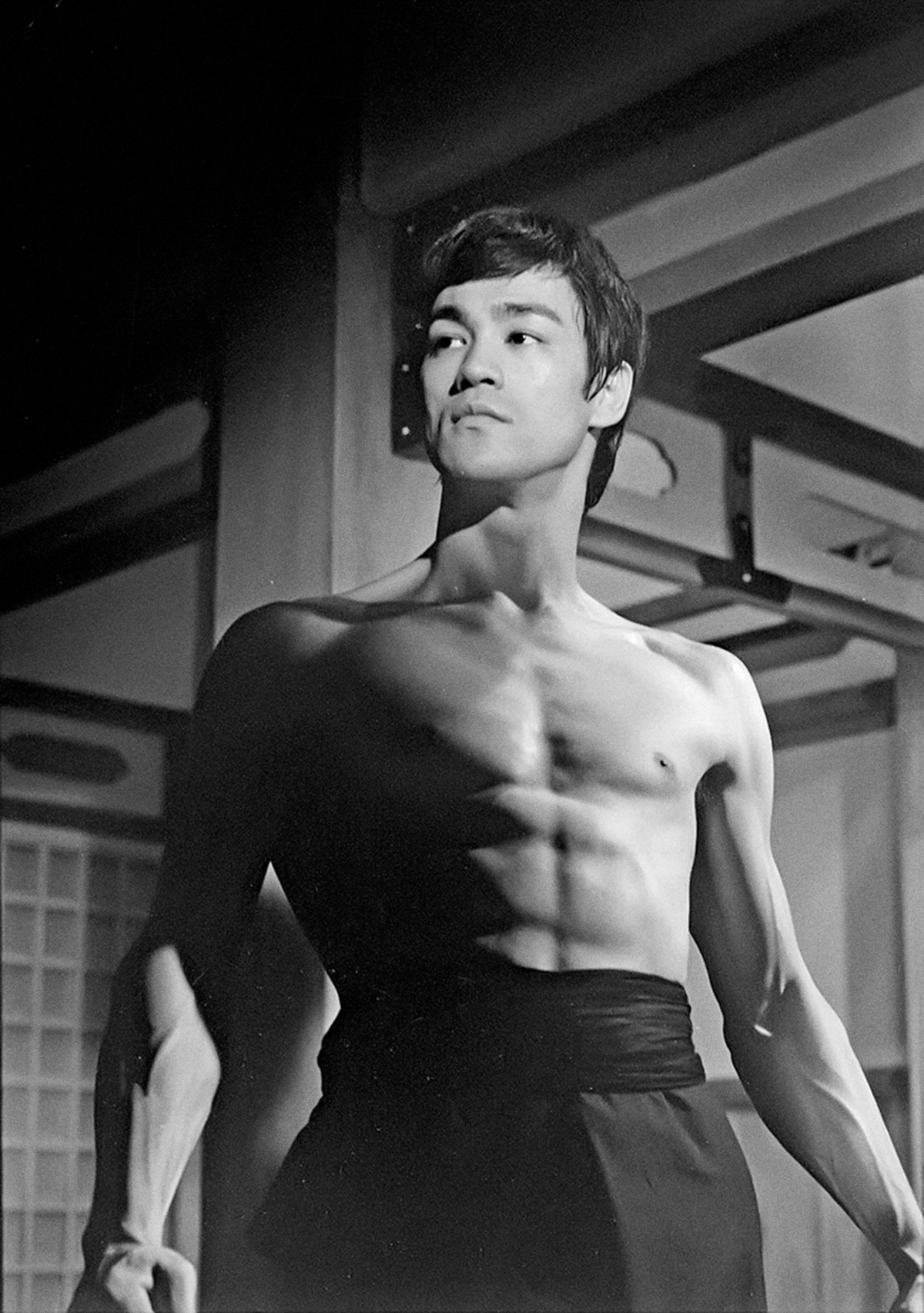
Wong Jack Man’s style was of arcs and circles, Bruce’s arrow-straight lines. Bruce attacked with flurries of straight punches to Wong’s chest and jabs at his eyes and throat. Wong backed up in a zigzag way, trying to sidestep Bruce’s attacks. Neither was landing clean blows. But Bruce controlled the tempo and the temper of the fight. Wong recalled, “Then he started to make these loud, horrifying sounds—like a ghost screaming is the only way I can describe it. I never heard sounds like that before in my life.”
五
UNDERDOG
五
UNDERDOG
Back home, Nancy Kwan received a call from a friend telling her that after the screening of Fist of Fury, the audience had torn out the seats in anarchic ecstasy, an echo of the youth protests in the streets. “Good for Bruce!” she exclaimed. “He’s invoking these riots going on now!”
All across Asia Bruce’s screams were now the war cry of the unheard, and he the embodiment of their uprisings, avenging their suffering and delivering them—at least for a moment in a darkened theater—a feeling of freedom.
六
ASIAN AMERICA
六
ASIAN AMERICA
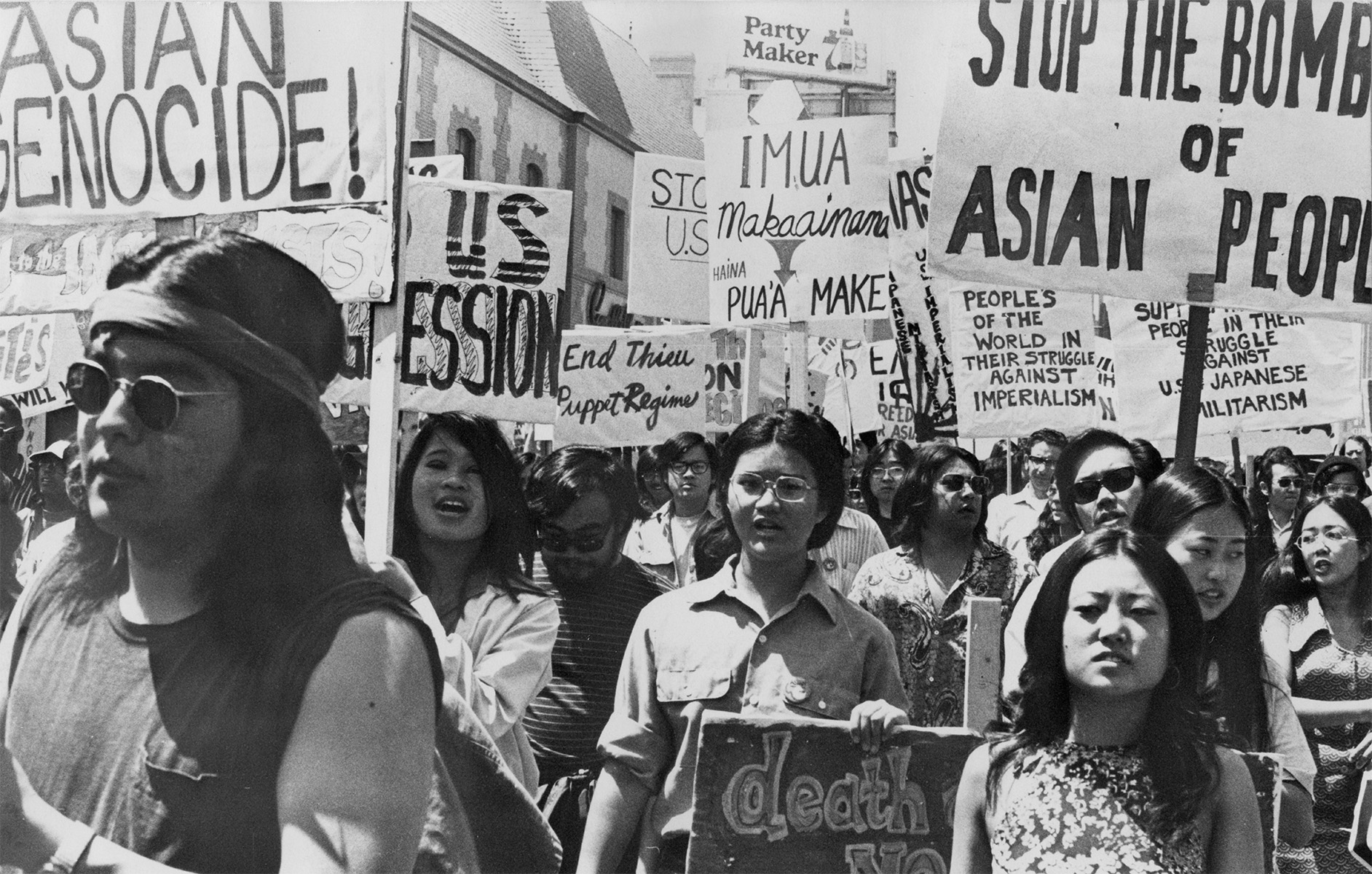
The idea of the Asian American, Viet Thanh Nguyen would later write, met the urgent need for self-defense, made a claim for representation and inclusion, and centered the necessity of solidarity. Alone Asian Americans would be weak and vulnerable. Together they could celebrate the joy of belonging. They might even be able to imagine what students from San Francisco State’s Philippine American Collegiate Endeavor (PACE) were audaciously calling “a new humanity, a new humanism, a New World Consciousness.”
七
STAR
七
STAR
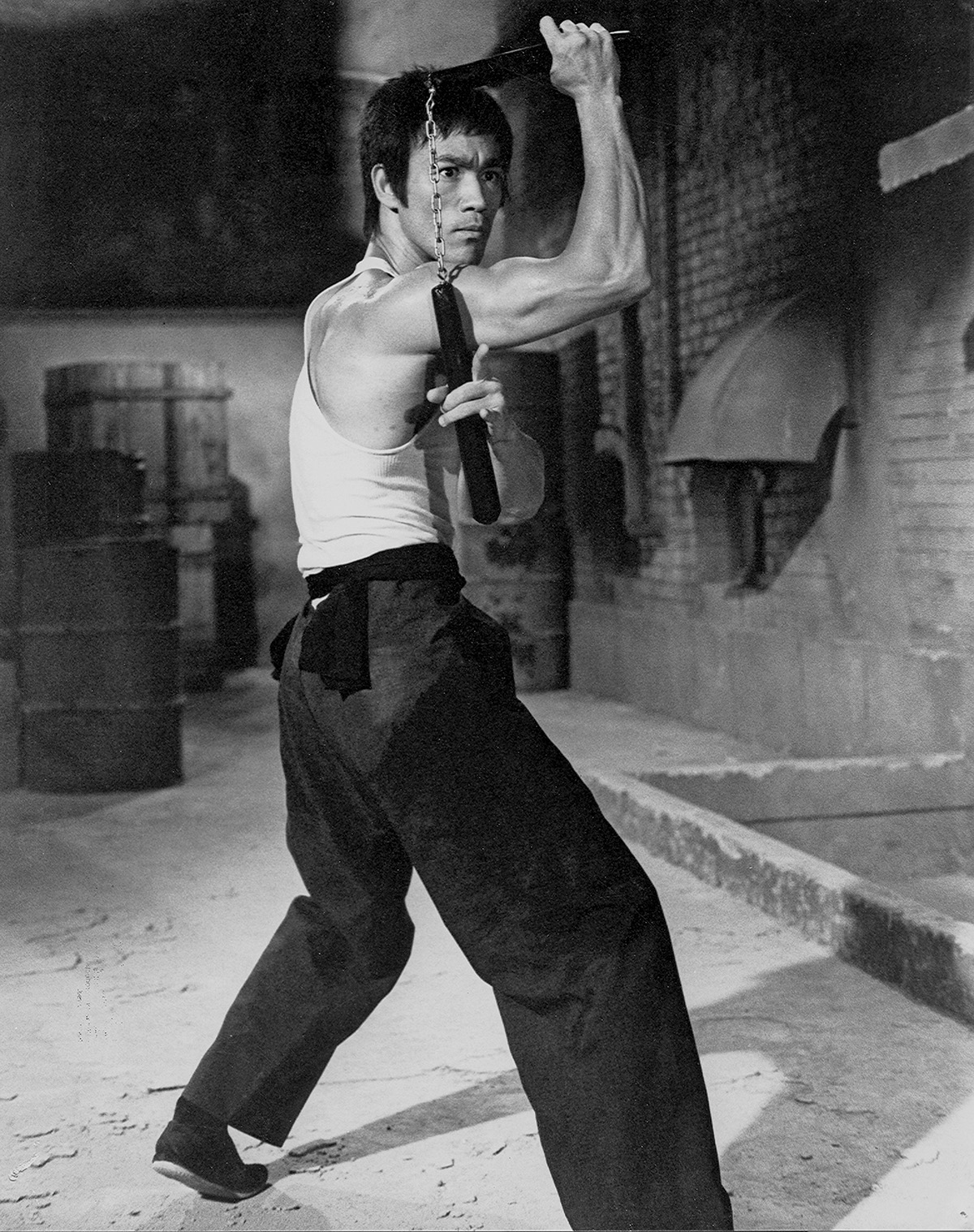
Dan Inosanto heard sadness in his old friend’s voice when Bruce said, “I don’t know who’s my friend. People are going to ask me something to get a job in the movie. They will say, ‘Hey, Lee Siu Long, remember me when I was in high school? You think you can use me as a stuntman or maybe an actor?’”
“To many, the word ‘success’ seems to be a paradise, but now that I’m in the midst of it, it is nothing but circumstances that seem to complicate my innate feeling toward simplicity and privacy,” Bruce wrote to his friend Mito Uyehara. “Fame and fortune are illusive creations and impostors.”
八
HERO
八
HERO
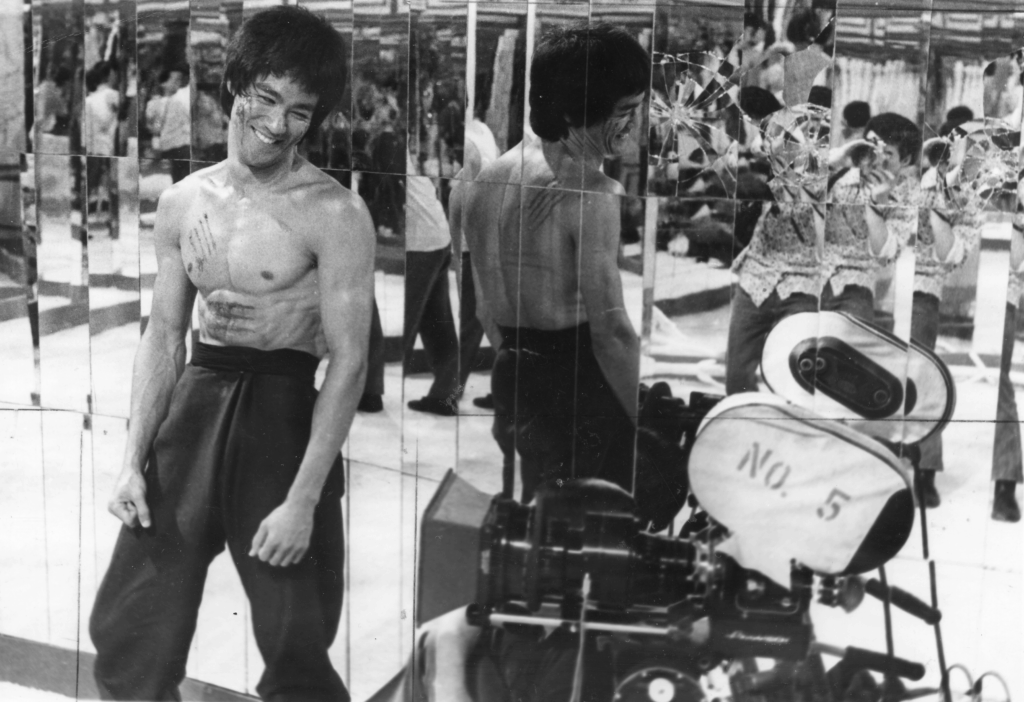
More than a half century later, Bruce Lee’s stature has far exceeded that of all his film contemporaries. In global impact he is closer to Muhammad Ali or Bob Marley. Young activists erected a bronze statue of him in the city of Mostar, Bosnia and Herzegovina, because, an organizer said, he stood for “our idea of universal justice—that the good guys can win.”
The image of Bruce Lee endures above time and place. But what do we know of the man?
Picture him, born in a segregated American hospital. Flickering child star. Teenage dance floor king. Street-fighting thug. Fresh-Off-the-Boat immigrant. Lonely bookworm. Forgotten waiter. Suburban dad. Chinese Tonto. Depressed recluse. All this before he becomes our hero.
Bruce Lee is perhaps the most famous person in the world about whom so little is known.
Ten Ways To See Bruce Lee
A video series
Executive Produced by The Mash-Up Americans, Amy S. Choi and Rebecca Lehrer
Video Editing by Grant Stakenas, Born Ready Films
Production Management by Shelby Sandlin, The Mash-Up Americans
Photos courtesy of the Bruce Lee Family Archive, Gidra, Chris Fujimoto, Manilatown Heritage Foundation
Art by Julianna Lee, Lily Qian, and Gian Galang
Music courtesy Blackalicious, DJ Shadow, Kamasi Washington, Chinatown Records Project
The rise of Bruce Lee and the rise of Asian America mirrored each other.
In the late 1960s and early 1970s, Bruce was on a mission. He wanted to demonstrate the beauty and power of Asian philosophy and fighting arts.
After Bruce passed away, he became a symbol of pride and standing up against oppression. Today it’s impossible to think about Asian America without thinking about Bruce Lee.
Bruce is a symbol for *everyone* fighting for justice all around the world. He’s an icon of power, solidarity, and the ongoing struggle to become who you want to be.
This is the last of a ten-episode series, *Ten Ways To See Bruce Lee*, that accompanies the new book, Water Mirror Echo. Available now!
For more info and to see all the videos, visit watermirrorecho.net
~
CREDITS:
Executive Produced by the @MashUpAmerican team, Amy S. Choi and Rebecca Lehrer
Editing by Grant Stakenas, Born Ready Films
Production Management by Shelby Sandlin, The Mash-Up Americans
Photos of Bruce Lee courtesy of the Bruce Lee Family Archive
Music from Blackalicious
watermirrorecho.net
#WMEVideo #WaterMirrorEcho
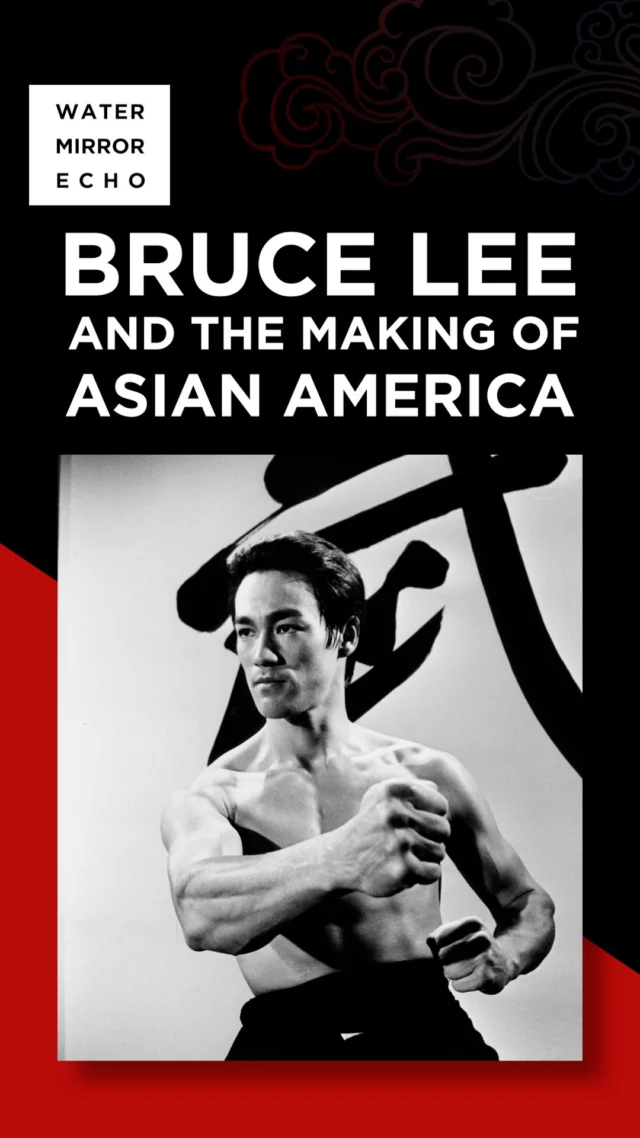
Bruce Lee’s most famous line is “Be Water.” It’s inspired athletes, corporate and community leaders, and activists all around the world everywhere. But where did this line come from and what did it really mean to him?
Watch the whole video!
This is the ninth in a ten-episode series, *Ten Ways To See Bruce Lee*, that accompanies the new book, Water Mirror Echo. Available now!
For more info and to see all the videos, visit watermirrorecho.net
~
CREDITS:
Executive Produced by the @MashUpAmerican team, Amy S. Choi and Rebecca Lehrer
Editing by Grant Stakenas, Born Ready Films
Production Management by Shelby Sandlin, The Mash-Up Americans
Photos of Bruce Lee courtesy of the Bruce Lee Family Archive
Music from Blackalicious
watermirrorecho.net
#WMEVideo #WaterMirrorEcho
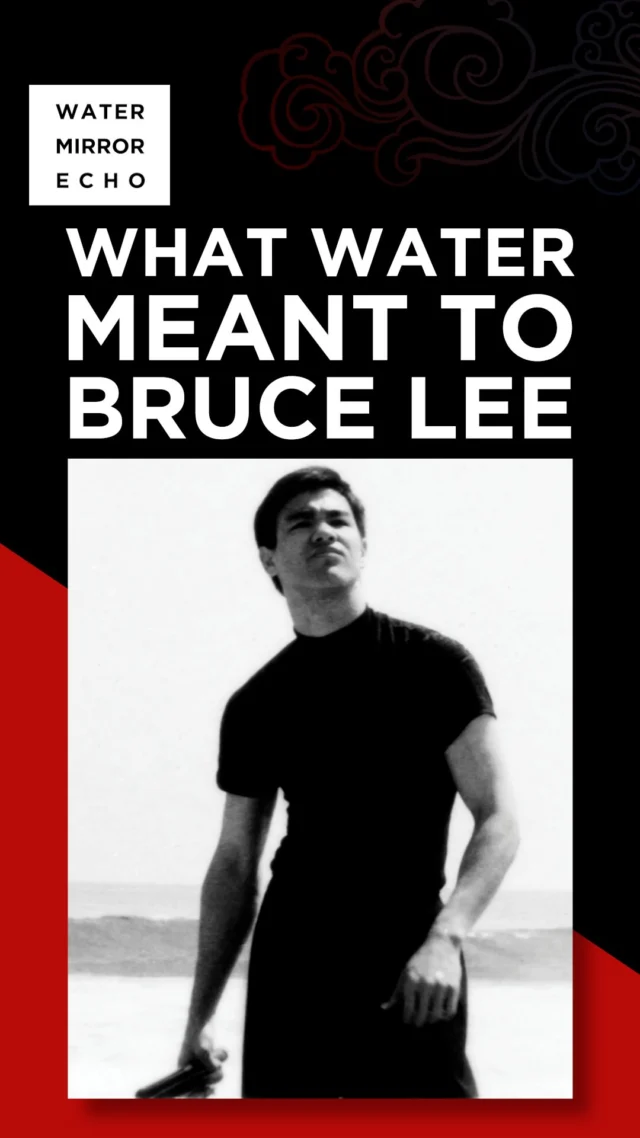
In the mid-1950s, the cha cha spread across Asia and Young Bruce Lee was one of the teens obsessed with it.
Watch the whole video!
This is the eighth in a ten-episode series, *Ten Ways To See Bruce Lee*, that accompanies the new book, Water Mirror Echo. Available now!
For more info and to see all the videos, visit watermirrorecho.net
~
CREDITS:
Executive Produced by the @MashUpAmerican team, Amy S. Choi and Rebecca Lehrer
Editing by Grant Stakenas, Born Ready Films
Production Management by Shelby Sandlin, The Mash-Up Americans
Photos of Bruce Lee courtesy of the Bruce Lee Family Archive
With big big love and appreciation to Chinatown Records and DJYiuYiu!
watermirrorecho.net
#WMEVideo #WaterMirrorEcho
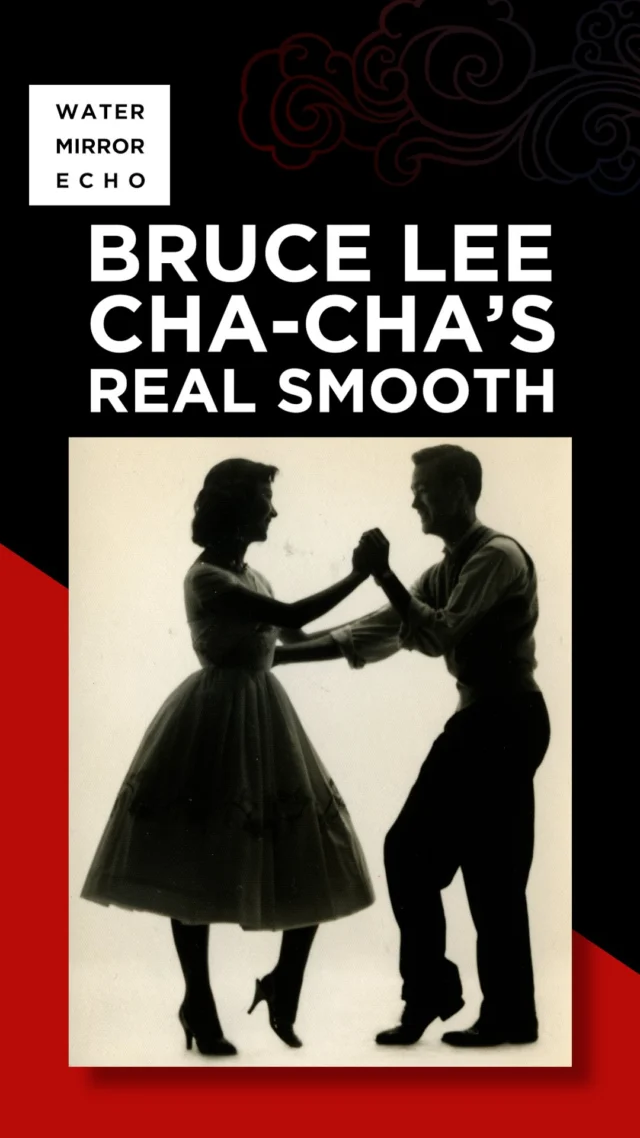
How did Bruce Lee transform himself from an ordinary immigrant into the global hero of the underdog?
It has to do with Bruce becoming Asian American.
Bruce grew up in Hong Kong, got into one too many fights and his parents sent him back to America when he was 18.
Where he really came of age was in the city of Seattle.
Specifically, in the Central District. When Bruce moved there in 1959, Seattle was 95% white. Almost all of the people of color lived in the Central District in the heart of the city. They weren’t allowed to live anywhere else.
There Bruce met people from all different backgrounds. The five years that he lived there would change his life forever. And then, in turn, he would go on to change millions of more lives.
Watch the entire video here.
And join us in Seattle on November 13th for the climax of the #WaterMirrorEcho tour!
A special event @townhall_seattle in conjunction with the @winglukemuseum featuring Shannon Lee and two of Bruce Lee’s closest friends, Doug Palmer and Sue Ann Kay.
Tickets now on sale! https://townhallseattle.org/event/jeff-chang/ or watermirrorecho.net
Ticket options include a copy of the book which we’ll all be there to sign! But general admission tickets without book purchase are also available. See you there.
#WaterMirrorEcho #WMEvideo
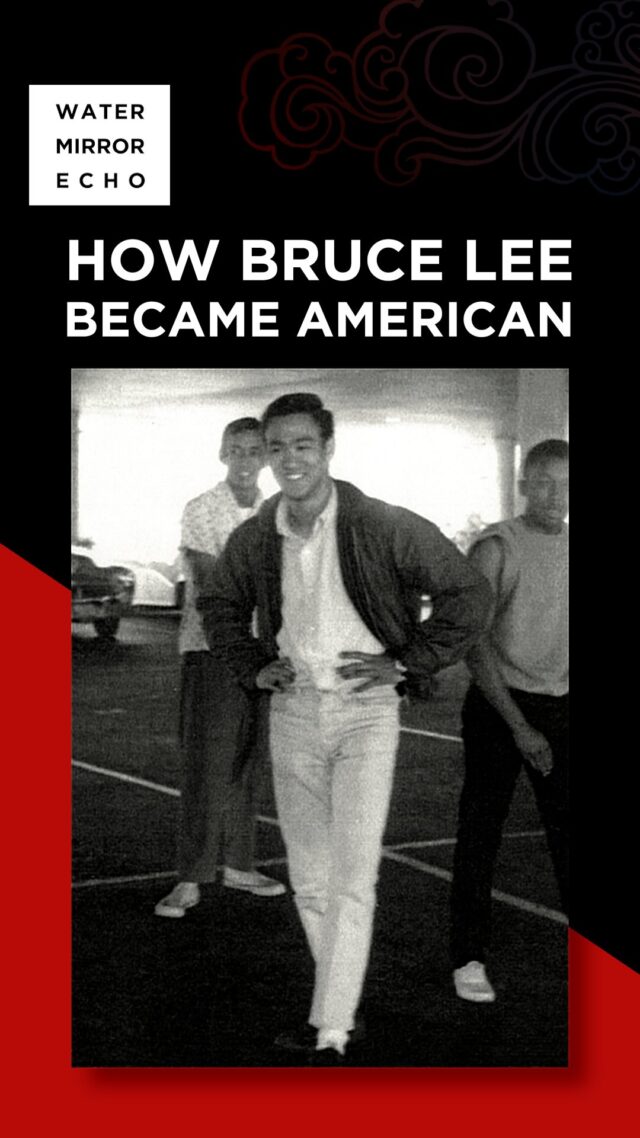
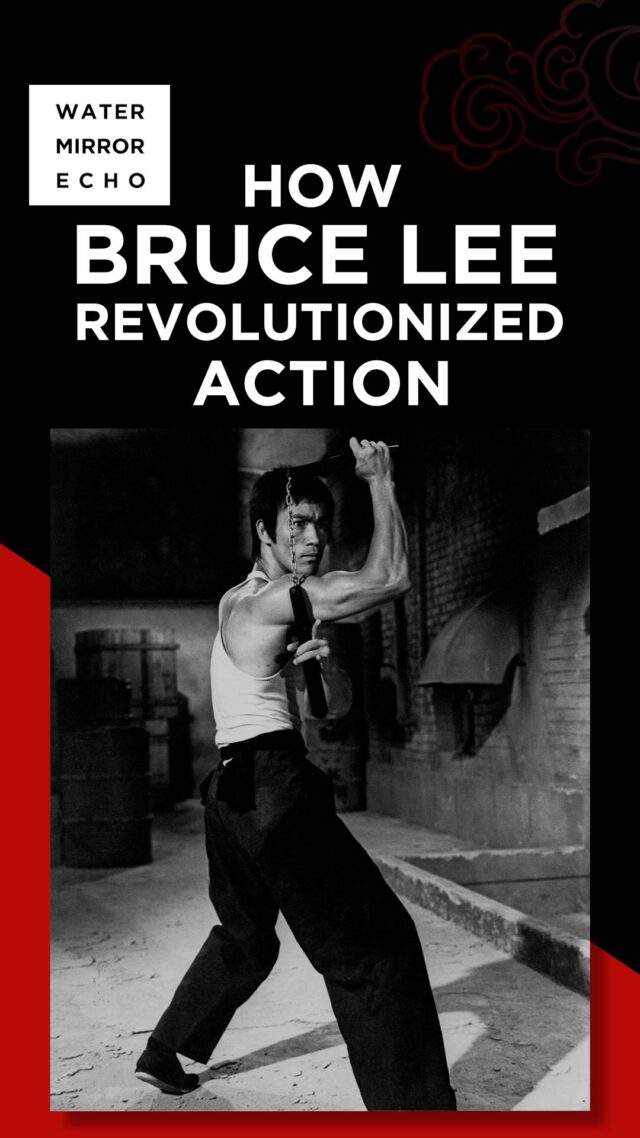
You know why action movies look so freaking cool now? Bruce Lee.
Back in the day, the heroes walked around with big guns. But when two characters got into a fight it used to look like slow-mo pantomime. Bruce changed all that.
He was like: put away your weapons and let’s go mano a mano like real folks.
Watch the whole reel right here!
This is the sixth in a ten-episode series, *Ten Ways To See Bruce Lee*, that accompanies the new book, Water Mirror Echo. Available now!
For more info and to see all the videos, visit watermirrorecho.net
~
CREDITS:
Executive Produced by the @MashUpAmerican team, Amy S. Choi and Rebecca Lehrer
Editing by Grant Stakenas, Born Ready Films
Production Management by Shelby Sandlin, The Mash-Up Americans
Photos of Bruce Lee courtesy of the Bruce Lee Family Archive
Music courtesy Kamasi Washington
watermirrorecho.net
#WMEVideo #WaterMirrorEcho
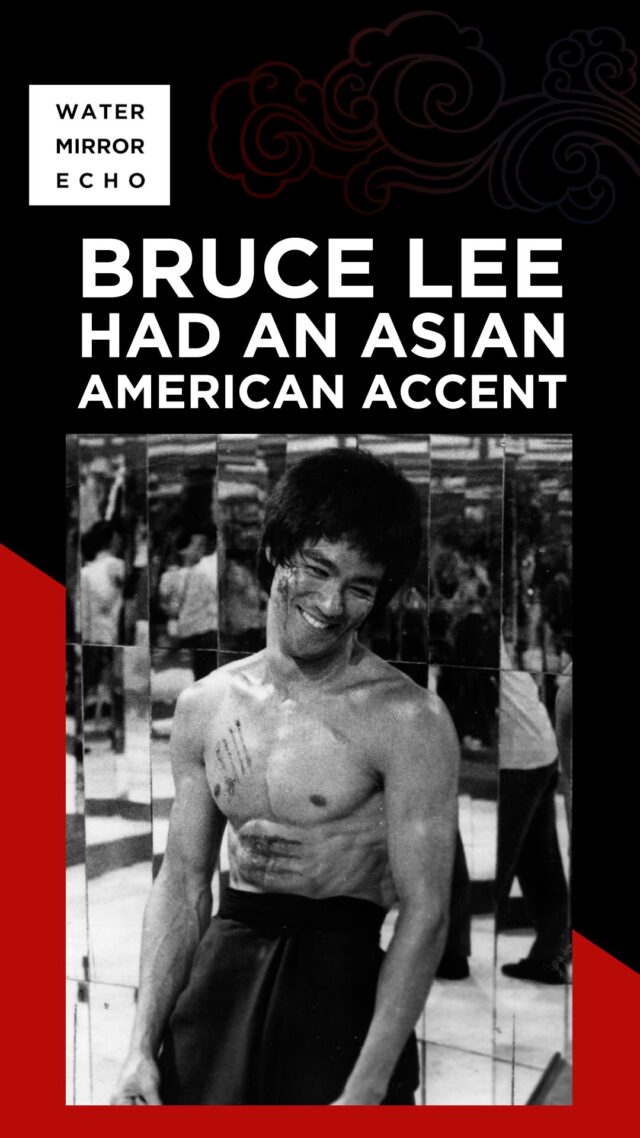
Bruce Lee had an Asian American accent. And not everyone liked it.
I talk to James Chen (@jameschennyc), the actor who voices the audiobook for Water Mirror Echo, about what it means to have an Asian American accent, and how some people’s reactions to it led to a key turning point in Bruce’s career.
Watch it all here!
This is the fifth in a ten-episode series, *Ten Ways To See Bruce Lee*, that accompanies the new book, Water Mirror Echo. Out next week on September 23rd!
For more info, visit watermirrorecho.net
~
CREDITS:
Executive Produced by the @MashUpAmerican team, Amy S. Choi and Rebecca Lehrer
Editing by Grant Stakenas, Born Ready Films
Production Management by Shelby Sandlin, The Mash-Up Americans
Photos of Bruce Lee courtesy of the Bruce Lee Family Archive
Music courtesy Blackalicious
With extra special thanks to @1587Sneakers
watermirrorecho.net
#WaterMirrorEcho #WMEvideo
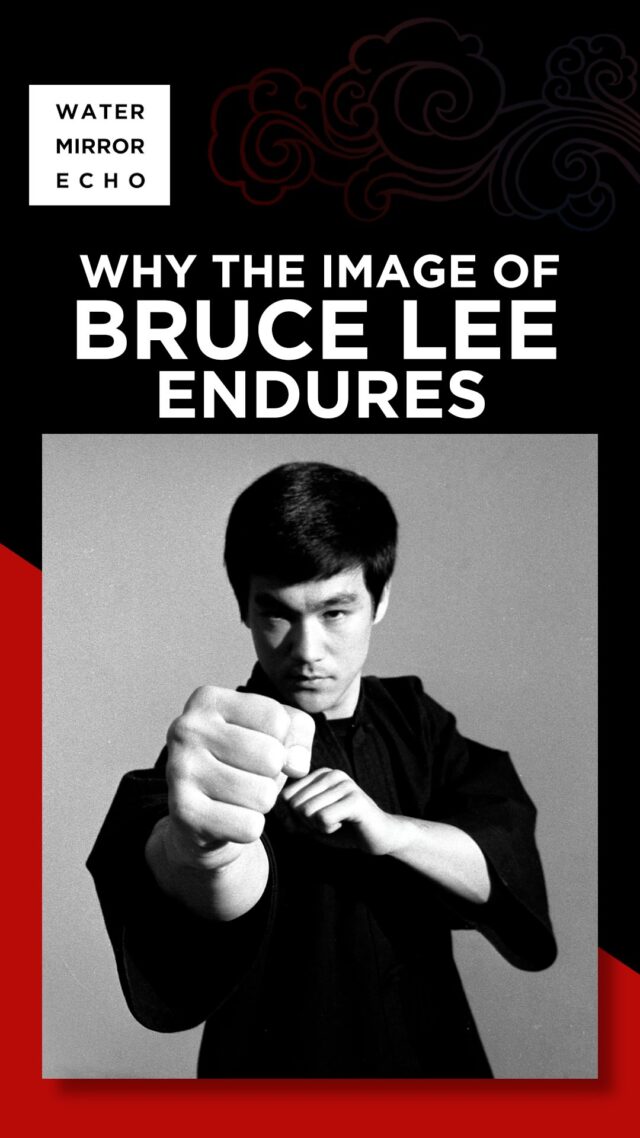
Why do we love the image of Bruce so much?
I remember as a kid growing up in Hawai’i, everyone on the playground wanted to be Bruce Lee. It’s like no matter how much evil they threw at the guy, he could overcome it.
Around the world you can find statues of Bruce Lee. There’s one in Hong Kong, and San Francisco is getting ready to put one in the heart of Chinatown. In the Balkans, the image of Bruce as a force for good was one that everyone shared.
For some of us, the image of Bruce Lee and the idea of Asian America have always been linked. And in 2020, Bruce Lee began to mean much more…
Watch the rest here!
This is the fourth video in a ten-episode series, *Ten Ways To See Bruce Lee*, that accompanies the new book, Water Mirror Echo. Out September 23rd.
For more info, visit watermirrorecho.net
Every Tuesday we’re dropping another short on Bruce Lee. Stay tuned!
~
CREDITS:
Executive Produced by the @MashUpAmerican team, Amy S. Choi and Rebecca Lehrer
Editing by Grant Stakenas, Born Ready Films
Production Management by Shelby Sandlin, The Mash-Up Americans
Photos of Bruce Lee courtesy of the Bruce Lee Family Archive
Art by Julianna Lee, Gian Galang, Lily Qian
Music courtesy DJ Shadow
watermirrorecho.net
#WaterMirrorEcho #WMEvideo
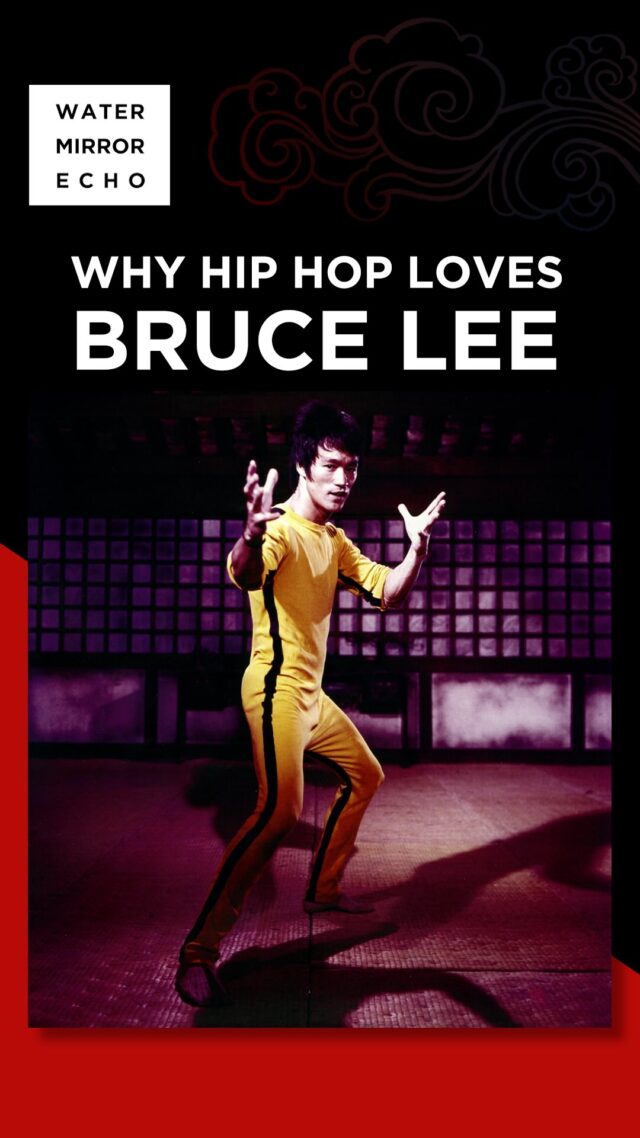
Why does hip-hop love Bruce Lee?
To tell the story we first have to talk about Black movies in the early 1970s.
Starting in 1971, movies featuring Black heroes as urban underdogs fighting back against the evils of The Man found a really passionate audience. These were called Blaxploitation movies. And by the way, I know you know who the Man was.
When Bruce Lee came along, Blaxploitation audiences recognized exactly who he was – he was an underdog fighting the Man too. The twist was: he was doing it with just his hands and legs!
But there’s one more reason urban audiences came to love Kung fu movies…
Watch the rest here!
This is the third video in a ten-episode series, *Ten Ways To See Bruce Lee*, that accompanies the new book, Water Mirror Echo. Out September 23rd.
For more info, visit watermirrorecho.net
Every Tuesday we’re dropping another short on Bruce Lee. Stay tuned!
~
CREDITS:
Executive Produced by the @MashUpAmerican team, Amy S. Choi and Rebecca Lehrer
Editing by Grant Stakenas, Born Ready Films
Production Management by Shelby Sandlin, The Mash-Up Americans
Photos of Bruce Lee courtesy of the Bruce Lee Family Archive
Music courtesy Blackalicious
watermirrorecho.net
#WaterMirrorEcho #WMEvideo
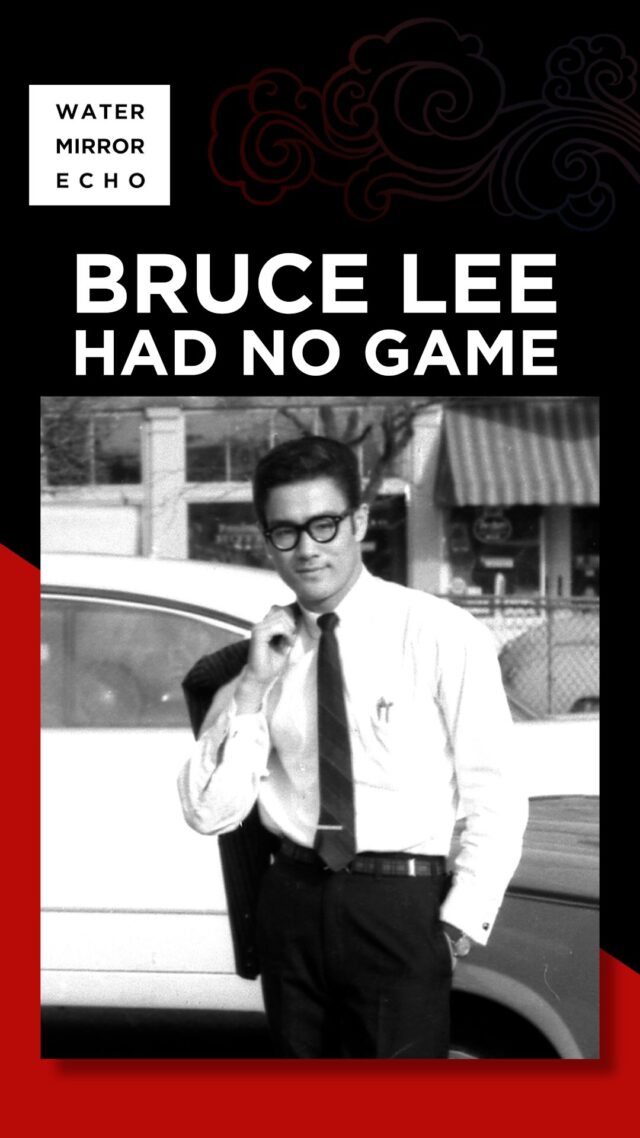
Did you know that Bruce Lee had no game? It boggles the mind, right?
Here’s the guy who reshaped the image of strength, sexuality, and basic badassery for Asian men for generations. He’s the person you wanted to be – or person you wanted to be with.
But let’s go back to teenage Bruce.
You might have heard that young Bruce liked to fight for fun, and that he was kind of a tough dude. It’s true – Hong Kong in the 1950s was the epicenter of a huge fight culture called beimo. Bruce was all up in it.
Before long, he was known among the guys as someone not to be messed with.
But with the ladies, he was less like Superman than Clark Kent…
Watch the rest here!
This is the second video in a ten-episode series, *Ten Ways To See Bruce Lee*, that accompanies the new book, Water Mirror Echo. Out September 23rd.
For more info, visit watermirrorecho.net.
Every Tuesday we’re dropping another short on Bruce Lee. Stay tuned!
~
CREDITS:
Executive Produced by the @MashUpAmerican team, Amy S. Choi and Rebecca Lehrer
Editing by Grant Stakenas, Born Ready Films
Production Management by Shelby Sandlin, The Mash-Up Americans
Photos of Bruce Lee courtesy of the Bruce Lee Family Archive
Music courtesy Blackalicious
watermirrorecho.net
#WaterMirrorEcho #WMEvideo
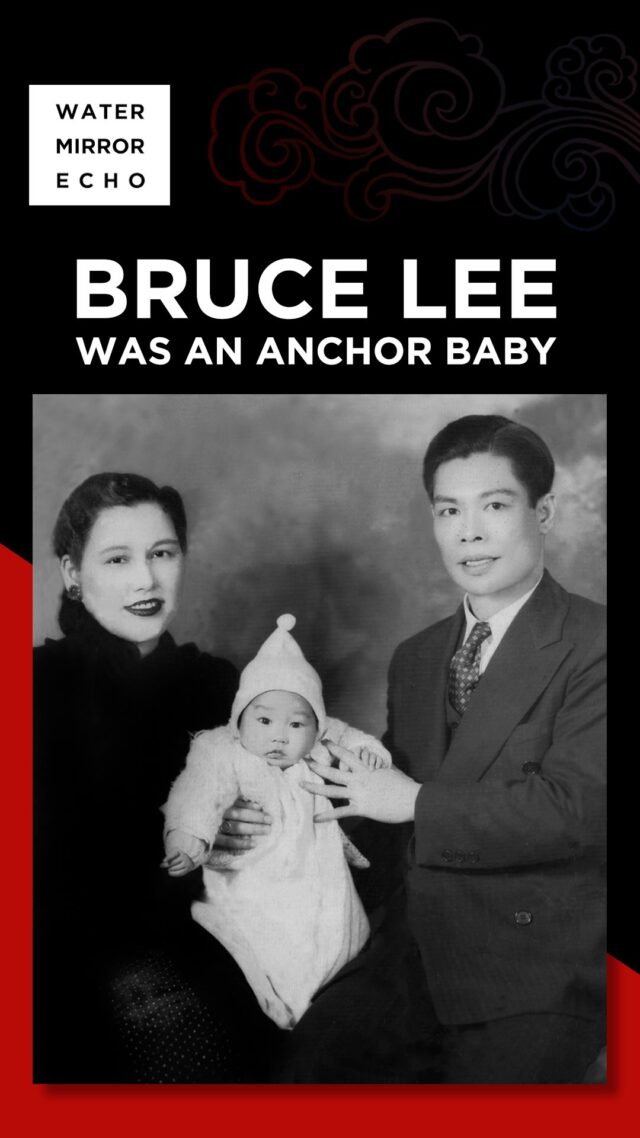
From the day he was born, Bruce Lee was changing the world. And he still is. Let’s start with this: Bruce Lee was an anchor baby.
He was born in 1940 in San Francisco Chinatown. His parents were here on temporary work visas to perform in the Chinese opera. When Bruce was four months old, they all moved back to Hong Kong where he would grow up.
But because he had been born in the U.S, he was a U.S. citizen.
This is a right that was made possible by the 14th Amendment of the U.S. Constitution. It was fought for by people like Frederick Douglass. It was secured by one of the first Chinese to be born in the U.S., a man named Wong Kim Ark, in a Supreme Court case in 1898. The Court affirmed that it didn’t matter what race you were, if you are born here, you are an American.
This has come to be called the principle of birthright citizenship.
Now you’ve probably heard there’s controversy about this idea. And you may have heard this slur: anchor baby…
Watch the rest here!
It’s the first video in a ten-episode series, *Ten Ways To See Bruce Lee*, that accompanies the new book, Water Mirror Echo. Out September 23rd. For more info, visit watermirrorecho.net.
Every Tuesday we’ll be dropping another short on Bruce Lee. Stay tuned!
~
LINKS:
May 19th Project on birthright citizenship: https://bit.ly/WongKimArk519
Protect birthright citizenship: https://stopaapihate.org/protect-birthright-citizenship/
~
CREDITS:
Executive Produced by the @mashupamerican team, Amy S. Choi and Rebecca Lehrer
Editing by Grant Stakenas, Born Ready Films
Production Management by Shelby Sandlin, The Mash-Up Americans
Photos of Bruce Lee courtesy of the Bruce Lee Family Archive
Music courtesy Blackalicious
#WaterMirrorEcho #WMEvideo
Audiobook
Narrated by James Chen
Directed by Robin Lai
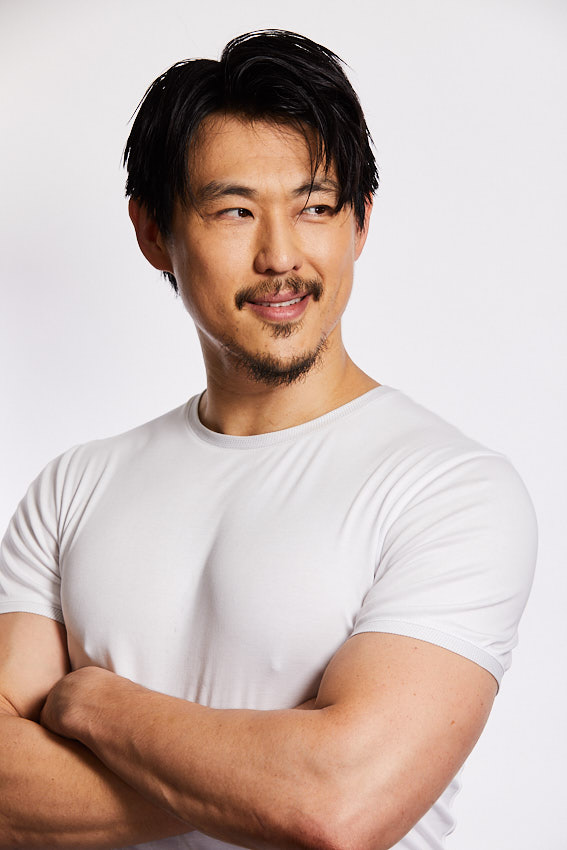
James Chen has enjoyed 8 seasons on CBS’s FBI as Ian Lim. He acted in The Mandalorian and Jason Katim’s Apple TV+ show, Dear Edward. He played Kal on The Walking Dead, and CSU Detective Adrian Sung on Law & Order: SVU. You can also see him in Run The World (STARZ), Iron Fist (Netflix), Seven Seconds (Netflix), 9-1-1 (FOX), and in the films The Amazing Spiderman, Labor Day, Mr. Popper’s Penguins, We Need To Talk About Kevin, making an award-winning performance as Ning in Front Cover. He is a long-time student of martial arts, including Jeet Kune Do. Follow him on Instagram at @jameschennyc.
“This extensive, thoughtful, and well-researched biography of the martial arts great Bruce Lee smoothly draws the listener in…Narrator James Chen deftly uses slight shifts in his voice when delivering quotes. He maintains control of his tone, making shifts when appropriate but never camping it up, a style that is appropriate since martial arts is partly about self-control…Chen’s skilled narration will keep listeners fascinated with Lee’s life–even those with only a passing interest in martial arts.” – Audiofile Magazine
“James and Robin did something historic. They made the choice to pronounce the hundreds of Asian names and phrases in the book just as you would actually hear them in our communities. They could have Anglicized or Americanized these names and phrases — that’s been the standard. But James and Robin made a choice to tell this story our way. They had to do lots of extra research to get it all right, and I can’t tell you how incredibly proud we all are of it. You can hear this audiobook and know that it truly sounds like us. It’s the sound of Asian America.” – Jeff Chang
A Director’s Note from Robin Lai:
“In preparing for the recording of this audiobook, I made the decision to have our narrator refrain from Americanizing pronunciations of most of the Asian names and terms in order to reflect how they would be pronounced natively. While some may disagree with this decision, I feel it is justified and necessary for the sake of authenticity.


Recording Engineers:
Simone Newman, Ethan Toga, Oscar Campo, Arra Melikian & Brock Grenfell
Post Production:
Marshall Media Custom Shop, JMM LATAM & Mantou Media Sdn Bhd.
John Marshall Media Producer – Zane Birdwell
For Harper Collins
Executive Producer
Suzanne Mitchell
Post Production Manager
Ben Coy
About
Publishers Weekly Top 10 Book of The Year — “More than a biography of actor and martial artist Bruce Lee, this is an essential history of the Asian American experience. Journalist Chang pulls off the ambitious endeavor with nuance, flair, and heart. In sentences that pack a punch, he effortlessly puts a larger-than-life figure into the context of his time.”
Book of the Year — Recognized by NPR, Vogue, Alta, Chicago Public Library, LA Taco, 48 Hills, Chicago Tribune, Kirkus Reviews, Northern California Book Award – General Fiction finalist
Most Anticipated / Must-Read Book — Chosen by the Los Angeles Times, New York Times, Washington Post, Chicago Tribune, Salon, Inside Hook
“An exuberant biography… Chang has written a capacious and entertaining account of Lee’s life and times… (He) has rummaged through the archives and interviewed Lee’s surviving family members and friends; he writes with the diligence of a scholar and the propulsive energy of a fan… (He) guides us through the life in a bustling narrative filled with vibrant anecdotes, historical context and chatty asides, alongside numerous photos of Lee that include high-contrast film stills and grainy, casual shots from the family archive. ”
— New York Times Book Review
“There are certain cultural histories that firmly establish their author as a skilled chronicler of virtually any subject imaginable. Jeff Chang’s Can’t Stop Won’t Stop is one of those books, offering a view of hip-hop at once panoramic and probing. Chang’s latest book sounds even more ambitious; it’s an in-depth look at Bruce Lee’s life that also explores the legacies he left behind — cinematic, familial and cultural. What happens when a skilled writer meets an ambitious subject? You’ll find that within these covers. ”
— Inside Hook
“In this monumental biography, Jeff Chang reframes the martial artist and cultural icon Bruce Lee as a foundational figure of Asian America. Drawing on diaries, letters, and exclusive archives, Chang reveals Lee as a thinker who wrestled with both Hollywood’s racial constraints and the philosophical traditions that shaped him. Lee’s pursuit of creative self-determination resonates throughout.”
— Alta Magazine
“Jeff Chang’s lively and deeply researched biography of Lee…doubles as a probing exploration of Lee’s profound effect on Asian American identity…This is that rare book that’s monumental in scope, ambition, and execution—and it’s both wildly fun and deeply rewarding.”
— Vogue
“Jeff Chang earned the world’s life-long literary attention twenty years ago with his debut Can’t Stop Won’t Stop, and while he’s continued to publish heroically, his new cultural biography of Bruce Lee feels like the (next) book he was born to write, a book almost as exhilarating and ambitious as Lee himself. It’s the perfect match of author and subject.”
— Electric Eel
“Meticulously sourced, image-rich…Tracing Lee’s life as a destiny-defining anchor baby, Hong Kong child star, American martial-arts innovator and global superstar, Water Mirror Echo uses a wealth of primary sources and archival material to reinscribe Lee’s legacy.”
— Salon
“Peppering the narrative with rich historical details and poignant analyses, Chang persuasively argues that Lee’s presence onscreen helped shape the idea of what it is to be Asian in America. This definitive account cements Chang as a preeminent chronicler of Asian American history.”
— Publishers Weekly Starred Review
“Chang elevates the personal and the political of Lee’s life to document a movement, era, and generation of Asian Americans…Reading this in-depth account of how Bruce Lee became the giant we all know him as is nothing short of fascinating and inspiring.”
— LA Taco
“It’s been 20 years since Jeff Chang’s masterful Can’t Stop Won’t Stop: A History of the Hip-Hop Generation, but he’s back in a big way with Water Mirror Echo: Bruce Lee and the Making of Asian America. Chang rejects the legend and opts for a dense portrait using rarely-seen archives, of a man whose immigration reflected the rise of Asian American communities..”
— Chicago Tribune
“What really elevates Water Mirror Echo is the way Jeff Chang…places Lee’s story within a concurrent bloom of Asian American identity. Chang tracks that cultural and political dimension so deftly that it feels inseparable from his biographical subject.”
— NPR
“Water Mirror Echo convincingly, compellingly transforms Lee from heroic idea to an unforgettable man central to Asian American history.”
— BookPage
“I didn’t realize what I didn’t know about Bruce Lee until I read Jeff Chang’s Water Mirror Echo. His portrait of Bruce Lee is epic and deeply personal, recasting this icon as a flawed yet empowering figure who seismically changed Asian America. Water Mirror Echo is a revelation and a stunning accomplishment.”
— Cathy Park Hong, Pulitzer-Prize finalist and author of Minor Feelings: An Asian American Reckoning
“Water Mirror Echo thrives not just as an ode, or a tome of cultural appreciation, but also as a rich analysis of the history within, and the landscape upon which a cultural icon can be formed, can be shaped, can be beloved. This book is as celebratory as it is incisive, as it is, at times, heartbreaking. A massive achievement.”
— Hanif Abdurraqib, National Book Award-winning author of There’s Always This Year and A Little Devil in America
“Water Mirror Echo is a remarkable story of a man, the traditions and communities that created him, and the new worlds he made possible. Like Bruce Lee himself, Jeff Chang is blessed with the vision to see things we do not yet see, thinking and writing with a restless, chasm-crossing, almost prophetic ambition.”
— Hua Hsu, Pulitzer Prize-winning author of Stay True: A Memoir
“Chang has masterfully crafted a riveting, nuanced and complex portrait of an icon. He tracks Bruce Lee’s remarkable journey as a charismatic child star turned delinquent teen fighter in Hong Kong, to his lonely and humbling exile to America. Chang not only offers one of the most powerful and thoroughly human looks at the flawed but vulnerable man behind the myth, but of an America that continues to question our right as Asian Americans to simply exist in this country.”
—Olivia Cheng, co-star of Warrior, Arrow, and Marco Polo
“In Water Mirror Echo, Jeff Chang delves into the private struggles and quiet moments of Lee’s life, capturing the man behind the myth while also exploring how his extraordinary journey shaped the Asian American experience. The book reveals Lee’s lasting influence, not only as a cultural icon but as a symbol of resilience, pride, and the fight for identity in a complex world.”
— Bao Nguyen, filmmaker and director of Be Water
“Jeff Chang’s singular gift is his ability to balance intimacy and grandeur—to tell the story of a movement, a nation, a generation simply by telling the story of a man. Precise, incisive, thoughtful and compassionate, he is the most important cultural historian of our time, and Water Mirror Echo is a brilliant addition to his corpus.”
— Adam Mansbach, #1 New York Times bestselling author of The Golem of Brooklyn and Go the F*ck to Sleep
“Jeff Chang tells [Bruce Lee’s] story as it’s never been told before, with a depth, empathic insight, and sheer phenomenal research all the way back to Lee’s early days in Hong Kong, all the way through his untimely death and posthumous legend…. Beyond the story of one remarkable figure, Chang’s is a story about being Asian and Asian American in America and about how Lee countered then-pervasive stereotypes in American movies of Asian men as unmanly, weak, and subordinate. Throughout it all, Lee himself comes through driven, charismatic, risk-taking, far from perfect but extraordinary.”
—Rebecca Solnit, author of Hope In The Dark and Orwell’s Roses
“Jeff Chang has done the impossible. He has found something new to say about Bruce Lee and in the process has gone deeper than all the rest. He has written the definitive biography of Bruce Lee.”
—W. Kamau Bell, Peabody- and Emmy-award winning television producer, stand-up comedian, and co-author of Do The Work! An Antiracist Activity Book
A Note on Sources
Here you will find an extensive select bibliography of sources I consulted for this book.
This document includes the Author’s Note from the book in order to give you a better idea of how I gathered and utilized the sources, as well as how I thought about my process. It complements the End Notes you’ll find in the book.
I hope this document may be of service to those interested in researching more about Bruce Lee and Asian America.